
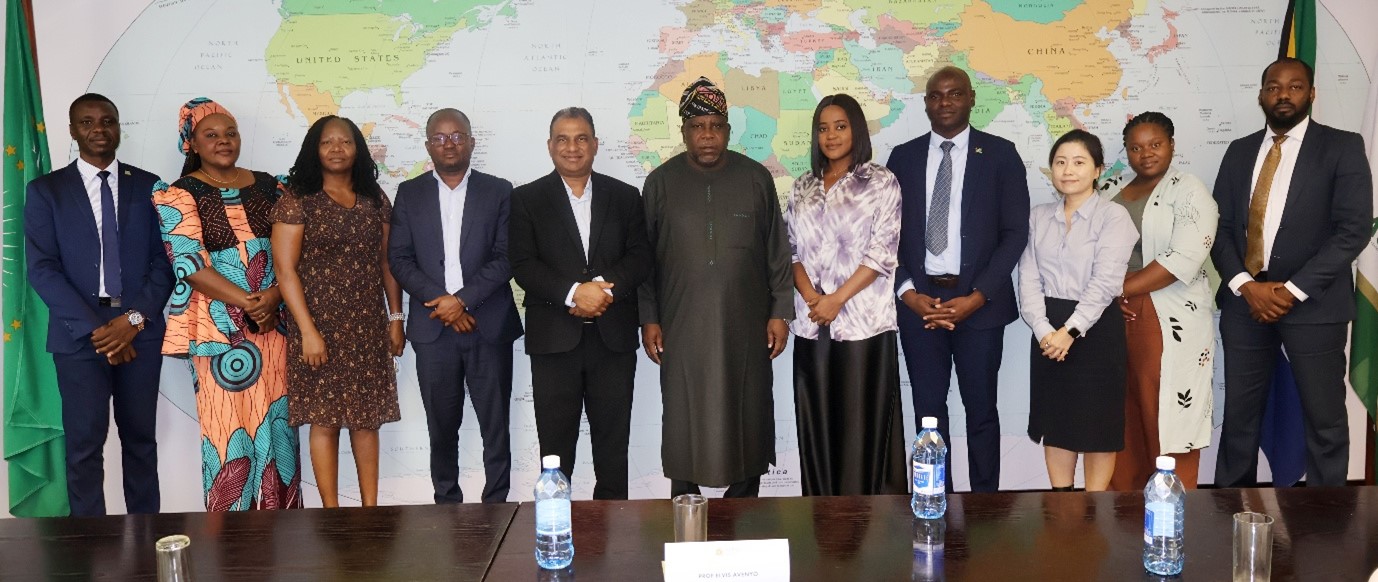
Durban, South Africa – 1–8 December 2025 – The African Peer Review Mechanism (APRM), in partnership with the African Centre for the Constructive Resolution of Disputes (ACCORD), held an e-Governance Technical Validation Workshop at the ACCORD Office in Durban. The e-Governance Framework represents Africa’s first consolidated, governance-anchored blueprint for digital advancement. It moves beyond fragmented and siloed approaches to place citizens, rights, ethics, data sovereignty, and cybersecurity at the heart of digital governance.
The Technical Validation Workshop welcomed representatives from continental institutions including ACCORD, the National Institute for Governance and Sustainable Development under the Ministry of Planning, Economic Development and International Cooperation of the Arab Republic of Egypt, the African Governance Architecture (AGA), the African Peace and Security Architecture (APSA) Secretariat, the Africa Centres for Disease Control and Prevention (Africa CDC) as well as national APRM structures from South Africa, Tanzania, and Namibia. This was, in addition to the APRM experts from the Continental Secretariat and academics from the universities of the Witwatersrand, Johannesburg, Pretoria, and the Western Cape. Involvement of these experts and their respective institutions ensured that governance, peace and security, public health, national peer review, and academic perspectives are fully incorporated into the validation process.
In his opening reflections, Dr. Vasu Gounden, Founder and Executive Director of ACCORD, highlighted the critical need to strengthen governance institutions at this juncture, as Africa faces the converging impact of seismic economic, technological, and demographic shifts. He noted that the biggest risk that African countries face is not technology but the absence of strong and resilient institutions that can harmonise the complex demands of governance, development, and stability. Left unaddressed, deliberate institutional strengthening will lead to digital disruption, further weakening fragile States rather than bringing about the required transformation.
In Africa, Dr. Gounden cautioned, countries “risk slipping into a dystopian future where chaos and instability become the new normal, and failed States become the new equilibrium” if deliberate efforts are not made to harmonise governance, development, and stability in a comprehensive way.
Referring to former OAU Secretary-General Dr. Salim Ahmed Salim, a highly revered leader who worked tirelessly to keep the continent politically united during its formative years, Dr. Gounden highlighted how contemporary African leaders continue to shape Africa’s present trajectory through insights that remain timeless. He underscored Dr. Salim’s enduring wisdom by emphasizing that strong and resilient institutions, rather than authoritarian forms of governance, provide the solid foundation necessary to safeguard freedom, ensure security, and promote sustainable development.
Honourable Jabiru Salisu, CEO of APRM Nigeria, highlighted the strategic significance of the workshop, noting that “digital governance is not an end, but an enabler of Africa’s broader development Agenda. Without strong digital governance foundations, he said, it is difficult for our countries to fully realise the benefits of innovation, public sector reform, and regional integration”.
Experts worked to refine the e-Governance structure with a view to enhancing its capacity to assess the readiness for, and the impact of, e-Governance reforms in Africa. The discussions concluded with consensus on the need for supportive mechanisms for Member States, alongside an emphasis on the importance of making rapid progress towards a forward-looking African e-Governance Framework. The experts further underscored that such a framework must be firmly grounded in African realities and sufficiently agile to respond to the fast-evolving digital environment, while supporting Member States’ efforts to strengthen governance, advance reforms, and build resilience, inclusion, and accountability in the digital era.
The APRM reaffirmed its readiness to work closely with Member States and partners to ensure that the framework becomes a practical and effective continental instrument for strengthening governance and accelerating Africa’s digital transformation.
For media inquiries or further information, please contact the APRM Continental Secretariat at info@aprm-au.org.